Life insurance in Canada explained: Types, costs & how to choose
Life insurance is one of the most important financial tools for protecting the people who matter most. It ensures your loved ones are cared for if you’re no longer there to support them, helping cover everything from daily expenses and mortgage payments to future education costs and long-term goals.
To qualify for most life insurance policies in Canada, applicants must be a Canadian citizen or resident, and typically must be physically present in Canada to sign the policy contract. Life insurance is especially important for protecting family members and anyone who is financially dependent on the policyholder, such as spouses, children, or elderly parents.
Understanding life insurance in Canada can feel overwhelming at first. Between different policy types, premium structures, and optional benefits, knowing where to start is often the hardest part.
This guide breaks down the key components of life insurance, how premiums are determined, and what to consider when choosing a plan that fits your family’s needs and long-term goals.
What is life insurance?
Life insurance is an agreement where policyholders pay regular premiums to an insurance company in return for a death benefit.
The Canadian life insurance market is one of the largest in the world. In 2020, total life insurance premiums written in Canada amounted to around CAD 109 billion. According to a 2019 Life Insurance Marketing and Research Association (LIMRA) survey, approximately 63% of Canadian households had some life insurance coverage. However, according to industry reports, although most Canadians recognize the importance of life insurance, they either delay purchasing it or may need to pay more attention to the coverage they need.
Types of life insurance
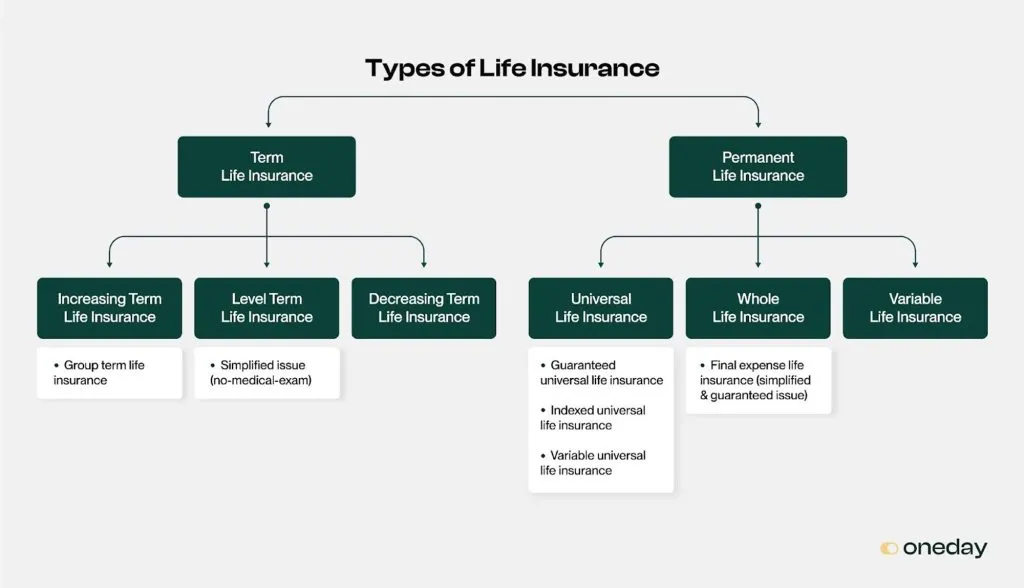
Term and permanent life insurance are two main types of life insurance. Term life insurance covers a set term and pays the death benefit to the beneficiaries if the insured person passes away within that period. Permanent life insurance, however, offers life coverage and pays the death benefit no matter when the insured person dies. There are a range of life insurance options available in Canada to suit different needs and financial situations.
Term life insurance
Provides coverage for a specific term, usually 5, 10, 15, 20, or 30 years. The initial term length is important to understand, as it determines how long your coverage lasts before renewal options or changes in premiums may apply, impacting your financial planning and coverage continuity. If the insured policy owner dies during the term, the named beneficiary receives a death benefit as long as the premiums have been paid throughout their lifetime. If the policy owner lives past the term, the policy expires, and the insured is no longer covered. There are five different types of term life insurance:
Level-term insurance: This is the most common type of term policy. It provides a death benefit that remains constant throughout the policy’s duration. Because the death benefit doesn’t change, the premiums remain consistent.
Increasing term insurance: In this type of term policy, the death benefit grows as the policy progresses. As the death benefit increases, the premiums also rise.
Decreasing term insurance: This term policy offers a death benefit that gradually decreases over the policy’s term, often in one-year increments. Consequently, the premiums decrease over the policy’s duration. Because the payout diminishes over time, decreasing-term policies are generally more cost-effective than level-term insurance.
Yearly Renewable Term (YRT) Plans: This term policy provides coverage for one year at a time. The initial premiums are lower but increase upon policy renewal. It’s important to consider the initial term length and how it affects your ability to renew the policy and maintain coverage over time.
Some insurers also offer joint first-to-die term insurance, where two people are covered under the same policy and receive the same coverage. This can simplify the process and cost for couples, but may reduce flexibility if circumstances change.
Premiums for term life insurance are generally lower than for permanent life insurance, especially for younger and healthier applicants. Many insurers allow policyholders to make monthly payments, making it easier to budget for life insurance costs.
The application process for term life insurance typically involves completing medical questionnaires to assess your health and risk factors. Some policies offer fast approval for eligible applicants, often with no medical exam or only a short medical questionnaire required, allowing you to get covered quickly.
Permanent life insurance
Permanent life insurance provides coverage for the insured’s entire life, not just a set term. As long as the policy remains in force and premiums are paid, permanent life insurance offers lifetime coverage for the insured person. In addition to the death benefit, these policies include a cash value component and can be borrowed against or withdrawn. Permanent life insurance policies generally have higher premiums than term policies.
There are several types of permanent life insurance:
- Whole life insurance: Whole life insurance is the most traditional form of permanent life insurance that provides a guaranteed death benefit and a cash value component, which grows at a fixed interest rate set by the insurance company. Premiums for whole life insurance remain level throughout the policyholder’s lifetime, and the policy may also pay dividends, which can be used to increase the cash value or reduce premiums. These policies offer lifetime coverage and can help policyholders grow wealth over time through the accumulation of cash value.
- Universal life insurance: Universal life insurance offers more flexibility than whole life insurance. It allows policyholders to adjust their premium payments and death benefit amounts within certain limits. The policy’s cash value earns interest at a rate set by the insurance company, and policyholders can also access the cash value or use it to pay premiums. When borrowing or withdrawing from the cash value, policyholders should be aware of potential tax implications.
- Indexed universal life insurance: Indexed universal life insurance (IUL) combines features of universal life insurance with the potential for growth tied to a stock market index, such as the S&P 500. The policy’s cash value is linked to the performance of the chosen index, offering the potential for higher returns. However, there are usually caps, participation rates, or other limitations on how much growth the policy can achieve. Policyholders should also consider the tax implications of accessing the cash value.
- Variable life insurance: The policy allows policyholders to allocate their premiums among various investment options, such as stocks, bonds, or mutual funds, within the policy. The cash value and death benefit can fluctuate based on the performance of the chosen investments. Variable life insurance offers the potential for higher returns but also carries investment risks.
Term life insurance vs. Permanent insurance policy
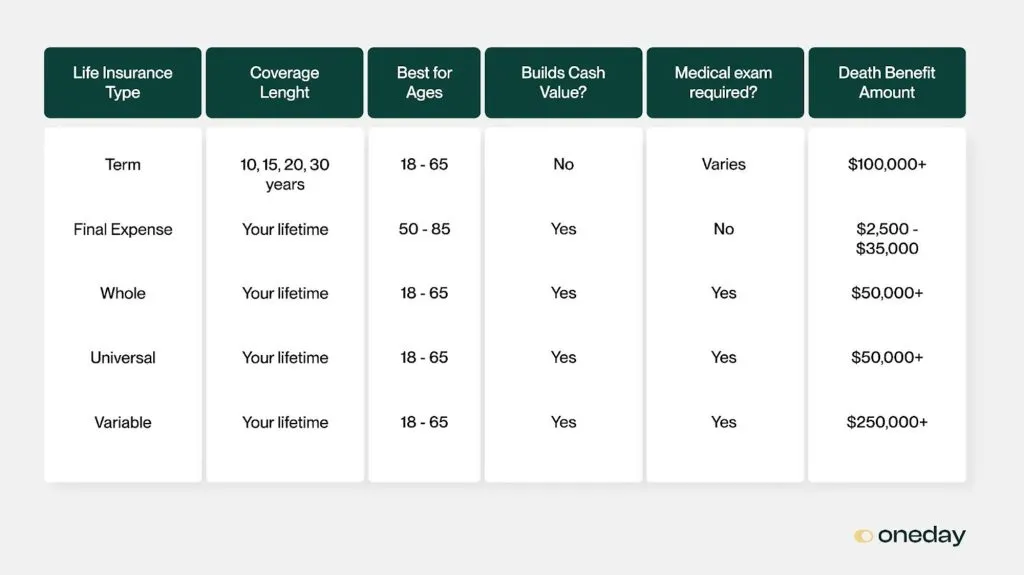
The choice between the two types of insurance depends on individual circumstances, financial goals, and needs. Term life insurance is often favored for temporary coverage needs, affordability, and simplicity. Permanent life insurance suits individuals seeking lifelong coverage, cash value accumulation, and potential estate planning benefits.
How life insurance works
Life insurance provides financial security to beneficiaries upon the insured person’s death. The policyholder pays regular premiums to keep the policy in force. If the insured person passes away during the policy’s active period, the insurance company pays out a death benefit to the designated beneficiaries.
A life insurance policy pays a lump sum to help replace lost income and provide financial support to loved ones, ensuring they can maintain their standard of living. This payout is typically tax-free and can be used by the beneficiaries to cover various expenses, such as funeral costs, outstanding debts, living expenses, education costs, or any other financial needs.
Life insurance policies come with specific provisions and conditions. These provisions outline any exclusions (situations where the death benefit may not be paid, such as suicide within a certain period), details on what happens if premiums are not paid (policy lapse or options for continuation), and the possibility of making changes to the policy or adding riders (extra benefits for an additional cost).
Cost of life insurance
Average cost of life insurance
The table shows pricing for a non-smoker, $500,000 in coverage for a 10 year term policy.
| Age | Premiums for men | Premiums for women |
|---|---|---|
|
30 |
$28.17 |
$20.17 |
|
35 |
$31.96 |
$21.91 |
|
40 |
$45.12 |
$31.83 |
|
45 |
$70.91 |
$50.46 |
|
50 |
$122.76 |
$83.26 |
|
55 |
$215.48 |
$151.98 |
Factors affecting the cost of premiums
Life insurance premiums are unique to each individual, and the actual cost can vary significantly.
-
Type of policy: Permanent life insurance policies generally have higher premiums compared to term life insurance due to the lifelong coverage and cash value component they provide.
-
Coverage amount: The higher the death benefit or coverage amount, the higher the premiums.
-
Term length: Longer-term lengths usually result in higher premiums. This is because the probability of a person’s passing away increases as they age, and a longer policy duration increases the likelihood of a claim.
-
Age: Younger individuals typically pay lower premiums since they are considered to be in better health and have a lower mortality risk.
-
Health status: Health plays a significant role in determining life insurance premiums. In the underwriting stage, insurance companies might ask applicants to have a medical exam to check their health. Pre-existing medical conditions or higher-risk lifestyles can result in higher premiums or even the possibility of being declined coverage.
-
Occupation and lifestyle: Certain jobs or activities, like being a pilot, deep-sea diver, or extreme sports enthusiast, could result in higher insurance premiums because there’s a greater chance of accidents or mortality.
If a term life insurance policy is canceled or surrendered in its early years, some policies may only return the premiums paid, rather than the full coverage amount.
How to buy life insurance
Here is a step-by-step guide to help you navigate the process:
Assess your needs: Determine why you need life insurance and what financial obligations you want to protect. Consider factors such as income replacement, mortgage or debt coverage, education expenses for children, and final expenses.
While some people have group life insurance through their employer as part of their workplace benefits, this coverage may not be sufficient for all your needs. It’s important to consider additional personal life insurance to ensure comprehensive financial protection, especially if you leave your job or require higher coverage.
Understand the types of policies: Get to know various policies, like whole life, universal life, and variable life insurance. Understand their differences in coverage duration, premiums, cash value, and other features.
Determine coverage amount: Calculate the appropriate amount based on your financial obligations and goals. Consider factors such as outstanding debts, mortgage, income replacement needs, education expenses, and future financial plans.
Evaluate the length of coverage: If you choose term life insurance, select a term length that aligns with your needs. Think about how long you’ll need it, such as until your mortgage is paid or until your kids are financially independent.
Research insurance companies: Find reputable companies with strong financial stability ratings and good customer service. Consider factors like the company’s track record, customer reviews, and ability to meet its policyholder obligations.
Complete the application process: Once you’ve selected an insurance provider, complete the application process. Be prepared to provide personal information, health details, and lifestyle information. Some insurance companies might need a medical checkup or ask to see medical records.
Underwriting and approval: The insurance companies will review your application and underwrite your policy based on the information provided. They may request additional medical information or clarification. The underwriting process determines your risk class and the final premium rate.
Review the policy: Carefully read the terms and conditions of the policy, including the coverage, exclusions, riders, and any additional features. Ask the insurance company for clarification on anything that’s not clear.
Purchase the policy: If satisfied with the terms and premiums, sign the necessary paperwork, make the initial premium payment, and officially purchase the life insurance policy.
Review and update as needed: Check your life insurance coverage regularly to ensure it still meets your needs. Consider updating the policy if your financial situation, family status, or goals significantly change.
Benefits of life insurance
Financial security: Life insurance provides a tax-free death benefit to beneficiaries in the event of the policyholder’s death, covering costs such as funeral expenses, outstanding debts, and mortgage payments.
-
Income replacement: Life insurance may replace the insured person’s income, ensuring that if the primary provider passes away, dependents can still maintain their way of life.
-
Estate planning: Life insurance can help by providing money to cover taxes and other expenses, making it easier to pass on assets to heirs.
-
Legacy and inheritance: Life insurance allows individuals to leave a financial legacy, ensuring their heirs receive an inheritance.
-
Charitable giving: Policyholders can designate charitable organizations as beneficiaries, supporting causes they care about.
-
Peace of mind: Life insurance provides peace of mind by ensuring that loved ones will be financially protected if the unexpected happens.
-
Tax benefits: With some policies, life insurance offers tax-free death benefits and potential tax-deferred cash value growth.
-
Supplemental retirement income: Some permanent life insurance policies can provide additional retirement income through policy loans or withdrawals.
Who needs life insurance?
-
Primary income earners or those who contribute significantly to family income
-
Parents with dependents who rely on their financial support
-
Homeowners with a mortgage or other outstanding debts
-
Individuals with co-signed debts, such as loans or mortgages
-
Business owners and key employees to ensure business continuity
-
Individuals with estate planning needs, such as covering estate taxes
-
Individuals with charitable intentions wishing to leave a legacy.
Considerations before buying life insurance
Before purchasing life insurance, there are several important considerations to remember.
Determine your coverage needs: Evaluate your financial obligations and your dependents’ needs. Consider factors such as outstanding debts, mortgages, and children’s education expenses. The face value of the policy should be sufficient to meet your family’s needs in the event of your death. It’s important to carefully assess how much coverage you need to ensure your loved ones are financially protected and your specific circumstances are addressed. Here are some examples to illustrate how you can calculate your coverage needs:
-
Income replacement: Consider how much income you contribute to your household annually. Multiply your annual income by the years you want to replace that income for your family. For example, if you earn $60,000 annually and want to provide income replacement for ten years, your coverage would be $600,000.
-
Outstanding debts: Think of any outstanding debts you have, such as a mortgage, car loan, or student loan. Add up the total amount owed. For instance, if you have a mortgage balance of $200,000 and student loans of $50,000, your coverage should be at least $250,000 to cover these debts, in addition to the amount you want to leave for your family as a replacement for your income.
-
Education expenses: If you have children and want to ensure their education expenses are covered, estimate the future cost of their education. Consider tuition fees, books, and other related expenses. For example, if your child’s college education will cost $50,000 per year for four years, you may want to add $200,000 more to your coverage.
-
Funeral and final expenses: Include an amount in your coverage to account for funeral costs, estate settlement fees, and any other final expenses your loved ones need to cover. On average, funeral expenses in Canada can range from $5,000 to $15,000.
-
Ongoing living expenses: Calculate the monthly living expenses of your dependents, such as housing, utilities, food, transportation, and healthcare. Multiply this monthly amount by the number of years you want to provide coverage. For instance, if the monthly expenses are $3,000 and you want to provide coverage for ten years, your coverage should be $360,000 ($3,000 x 12 months x 10 years).
-
Special needs or care expenses: If you have a dependent with special needs or require long-term care, factor in the additional expenses associated with their care. Consider the costs of therapies, medical equipment, or professional caregiving services. Estimate the amount needed to provide for their care in your absence.
- Term length: If term life insurance suits your circumstances, then decide on the length of the policy.
- Company credibility: Research and select a reputable life insurance company. Check its financial strength ratings from independent rating agencies to ensure it can pay claims when needed.
- Review optional riders: Riders are additional benefits you can add to customize your policy, such as critical illness rider, accidental death benefit, or disability waiver of premium. Consider which riders are suitable for your needs.
- Policy exclusions and limitations: Understand the exclusions and limitations of the policy. Insurance policies may restrict specific causes of death or waiting periods before coverage takes effect. Carefully read the policy documents and clarify any doubts with the insurance provider.
Life insurance riders
Riders are extra benefits added to a life insurance policy for more protection beyond the basic death benefit.
-
Accelerated Death Benefit Rider: If a policyholder is diagnosed with a terminal or a specified critical illness, this rider allows the policyholder to receive a portion of the death benefit. It can cover medical expenses or other costs.
-
Guaranteed Insurability Rider: This rider lets the policyholder buy more coverage in the future without undergoing a medical exam. It is useful when the insured wants to increase their coverage as their financial responsibilities or life circumstances change.
-
Accidental Death Benefit Rider: This rider pays an added death benefit if the insured person dies in an accident. It provides the beneficiary with extra financial protection in case of accidental death.
-
Child Term Rider: This rider provides life insurance coverage for the policyholder’s children. If a child covered under this rider passes away, the policyholder receives a death benefit to cover funeral expenses and other related costs.
Making changes to your life insurance policy
Life insurance policies can be modified or changed during the policy term based on the policyholder’s evolving needs.
-
Increasing or decreasing the coverage amount: The policyholder may request to adjust the death benefit based on changes in financial responsibilities or goals.
-
Changing the policy term: In specific policies, the policyholder may have the option to extend or reduce the term length depending on their evolving needs.
-
Adding or removing riders: Policyholders can request to add or remove riders to tailor the policy to their changing circumstances. For example, a policyholder may add a critical illness rider or remove an accidental death benefit rider.
-
Updating beneficiaries: Policyholders can change the designated beneficiaries to ensure the life insurance proceeds go to the intended recipients.
Policy changes often require a formal request to the insurance company, which may involve providing updated information, completing forms, and reviewing any associated changes in premiums or policy terms.
Exploring eligibility and qualifying for a life insurance policy
Insurance companies in Canada have underwriting guidelines and eligibility criteria based on risk assessment and business objectives.
These guidelines are formulated using a combination of factors, including actuarial data, statistical analysis, historical claims experience, and industry regulations. While there are commonalities in the industry, each insurance company has some flexibility in setting its specific criteria. Here are a few options to explore:
-
Shop around: Different insurers have different underwriting standards and risk tolerances. Just because one insurer denied coverage or provided unaffordable quotes doesn’t mean all insurers will do the same. It’s worth exploring other insurance companies that may have different guidelines and offer more competitive rates.
-
Work with a specialized broker: Life insurance agents specialize in helping individuals with complex insurance needs or previously declined coverage. They have in-depth market knowledge and can connect you with insurance companies with more lenient underwriting criteria or specialized products.
-
Consider alternative policies: If traditional, fully underwritten policies are not feasible, alternative options such as guaranteed or simplified issue life insurance policies may have less stringent underwriting requirements. However, these policies may have lower coverage amounts and higher premiums.
-
Improve your health: Quit smoking, adopt a healthier lifestyle, and manage existing medical conditions to positively affect your eligibility and premium rates. Underwriters consider current health status, so demonstrating improved health and habits can increase your chances of obtaining coverage at more affordable rates.
Once you’ve determined your life insurance needs, gather quotes from multiple providers to find the best offer. Use this leverage to negotiate a better deal if possible. Next, complete the application process, including providing personal documents, an interview, and a medical exam. Some providers waive this requirement, so be sure to ask.
After completing the necessary steps, await approval, sign the documents, and pay for your policy to secure your loved ones’ financial future. Buying life insurance guarantees that your loved ones will be financially protected and supported in the event of your death, sparing them from financial struggles and difficulties.
If you are looking for affordable life insurance, consider opting for a term life policy, which offers substantial coverage at a lower cost. A healthy lifestyle helps reduce premiums, so consider maintaining a healthy weight, abstaining from smoking, and effectively managing any medical conditions, which can significantly lower your life insurance costs.
Having health conditions doesn’t necessarily translate to higher premiums. Different insurers may offer varying rates for specific conditions, so exploring multiple options and comparing rates can help you find the most favorable terms for your circumstances, ensuring you secure the best possible coverage at a competitive price.
Life insurance – Conclusion
Having a life insurance policy means giving your family financial stability and peace of mind, no matter what the future holds. It ensures they can stay in their home, pay down debts, and continue to reach their goals, even if you’re not there to help.
Choosing the right policy comes down to understanding your priorities and how long you need protection. Whether it’s a short-term policy for your mortgage years or permanent coverage for estate planning, life insurance helps secure the foundation of your financial plan.
If you’re ready to protect your loved ones and find coverage that fits your goals, get a personalized life insurance quote today and see how affordable peace of mind can be.
Frequently asked questions about life insurance in Canada
Is life insurance in Canada really tax-free for beneficiaries?
Generally, the death benefit is paid as a tax-free lump sum to your beneficiaries in Canada. Individual situations vary, always consider personal tax advice.
How are Canadians protected if an insurer fails?
Assuris protects most Canadian policyholders. For death benefits, coverage is up to $1,000,000 or 90% of your benefit, whichever is higher.
If I have a complaint about my policy, who do I contact?
Start with your insurer’s complaint office and request a final position letter. If unresolved, escalate to OLHI; in Ontario, FSRA provides guidance.
Will I need a medical exam?
Some applicants do, some don’t. Oneday offers no-medical-exam options for eligible applicants, subject to underwriting and provincial regulation.
Is term or permanent better?
It depends on your goals. Term is usually most affordable for time-bound needs; permanent can support lifelong needs and estate planning. (Use our coverage calculator to compare.)
Sources:
- LIMRA, “2019 Canadian Life Insurance Ownership Series“
- FCAC, “Life insurance”
- Assuris, “How Am I Protected?”
- CLHIA, “A Guide to Life Insurance (Consumer Brochure)”